
THE PAUSE
The Pull of the Moment Before a Decision is Made
The pianist Arthur Rubinstein was once asked how he handled the notes so well. His response was immediate: “I handle the notes no better than many others. But the pauses—ahh, that’s where the art resides.”
The Pause. That most crucial moment before a decision is made.
We sense it in our bodies: a charge that holds us in place, a different quality of time altogether.
The Pause contains the wholeness of the moment and everything that will come to matter once it’s lifted: what we choose to reveal or withhold, what we need to protect, and what we're willing to risk.
Here we trace the Pause across four actors that shape how art comes into being: the collector, the curator, the artist, and the viewer. Each experiences the Pause differently, but all must make peace with stillness and the vulnerability it reveals.
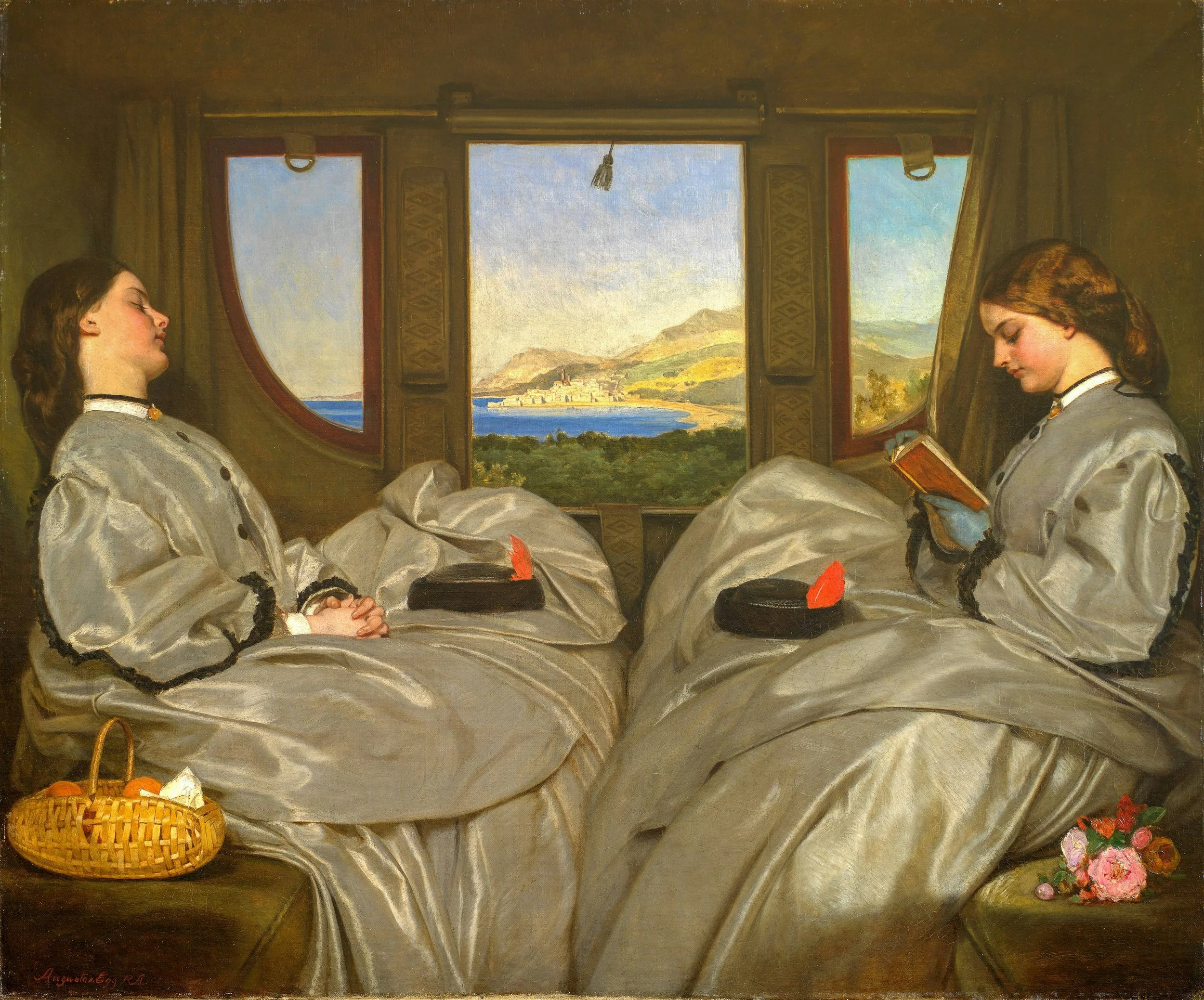
The Traveling Companions (1862) by Augustus Leopold Egg
Photo by Birmingham Museums Trust
The Collector’s Pause
At an art fair, a collector steps into a booth. The bustle recedes, noises fade. Their attention is arrested by a single artwork. The Pause settles in, pushing out hovering dealers, circling viewers, and the ticking of a rushed clock. One question persists: Do I only desire this piece, or can I not live without it?
Some collectors don't pause at all. Their decisions are instant and instinctive. It strikes like lightning, like love at first sight. The artwork connects on a personal level, and they feel it before they can explain why. Still, even these intuitive choices are filtered, sometimes reflexively: Will this piece matter in my collection? Does it help me grow, or is it just decoration?
Other collectors pause methodically. They study exhibition histories, visit studios, and speak with artists and peers. This pause helps them see if a piece fits their collection, their personal journey, or a larger historical narrative. Mission-driven collectors are especially deliberate, ensuring alignment with values such as representation, fairness, or rectification. They wait for something new, unexpected, art that challenges them, not just confirms what they already know.
The collector’s pause is where discernment lies. The works we choose for our homes should reflect who we are and the lives we share, and these decisions are almost always influenced by our backgrounds, however unconsciously. For many collectors, especially those navigating multiple cultures, there can be an urge to pull back, a self-censorship of sorts. Pausing allows them to stretch those boundaries and choose art that is both comforting and challenging.
The Curator’s Pause
In the quiet of an empty gallery, before the works are installed and the journey begins, the curator stands alone. The stillness is heavy. Anything can happen. For curators, the Pause brings a question: how will the work change the story once it enters the room?
The lived experience of an exhibition is always more complex than a curator could ever intend or anticipate. In their pause, curators acknowledge the gap between their intention and the public’s perception. Accepting this uncertainty and the inherent, unpredictable character of curating is the essence of the curatorial pause.
This is where their responsibility to artists, viewers and space come together. It’s at that moment when the curator decides what kind of experience to create and how much comfort or discomfort to allow. Here, the curator must weigh the merit of provoking deep thought against the potential unease such reflection might cause.
In contexts where cultural boundaries must be honoured, the curatorial pause holds additional weight: How do we push boundaries while respecting who we are? How do we strike a balance between new concepts and cultural sensitivities? The Pause then becomes a moment of assessing stakes, pitting ideas that resonate with us as a society and align with our values against the trend of the moment.
The Artist’s Pause
In a world that is yet to be, the artist stands. The brush might hover, the chisel might stop, or the canvas might sit untouched in another room. Hesitant. Sometimes pausing from doubt: Is this mine to speak of? Other times it’s about protection: Can this work exist in the world without being misunderstood?
The artist’s pause creates the conditions for the work to materialize through choice and questioning: choosing authenticity over imitation, balancing individual and collective identity and contrasting between personal and borrowed experiences.
Artists in Arab contexts experience several kinds of pauses. There’s the pause of self-censorship, where one weighs not only personal risk but potential impact on family, community, and collaborators. The pause of pushing boundaries while still honouring cultural roots. The pause of liability when working with archives, images of conflict, or inherited narratives that have been claimed too many times.
Many artists choose to extend the Pause on purpose, reworking, erasing, or waiting before finishing, just to see what’s on the other side of uncertainty. Often, moving forward comes from making peace with what is, and letting the work exist in the open as it is.
The Viewer’s Pause
The viewer's pause is unlike any other. It answers no professional obligation, acquisition imperative or creative pressure.
Viewing art necessitates withdrawal from social space and a form of insulation. It requires comfort with solitude, standing still, absorbing the work while also reflecting on the vastness within oneself. It’s here, in this unguarded moment, that art completes its journey.
When standing before a work of art, the body responds first: a sudden stop, a held breath, a shift in attention. Objects, in turn, seem to look back. This pause precedes logic, occurring before the mind even tries to catch up.
The viewer’s pause may signal recognition: I know this feeling, though I have never seen it portrayed in this manner. Alternatively, it may indicate an inexplicable pull: I do not understand this, yet I cannot look away. We see this in galleries and museums when the viewer stops mid-stride, steps back, or returns after completing a circuit.
There’s also a pause marked by discomfort, when viewers recognise their own implication in what they observe. Artworks addressing difficult histories, violence, or personal vulnerability frequently elicit this response: a moment to decide whether to engage or withdraw. This pause reveals an ethical question: at what point does witnessing become complicity, and when does turning away constitute abandonment?
To be moved by art is to be exposed. To acknowledge that a work has affected you is to reveal something about your own experiences and desires. Many refuse this vulnerability. But those who embrace the Pause and accept the risk of being affected? They give art its true purpose.